Every ML engineer who moves a notebook experiment into a real training run eventually hits the same wall: a laptop GPU cannot keep up with a modern model. This guide walks through everything between deciding you need dedicated GPU capacity and watching your first training loss curve converge, covering provisioning, driver setup, framework installation, storage, networking, and the operational habits that keep the infrastructure running reliably in production for Indian engineering teams.
A GPU Server for Deep Learning is the single piece of infrastructure that decides whether an ambitious model architecture ever makes it out of a notebook and into production. Provisioning capable hardware for deep learning used to be a weekend project for a handful of research labs tucked inside universities or well-funded corporate research arms. In 2026 it is a routine decision made by startups, enterprise ML teams, and solo practitioners alike, because deep learning has moved from a research curiosity into a core part of how products get built, sold, and supported. The right setup determines whether a training job finishes in hours or days, whether an experiment can be iterated on the same afternoon it was conceived, and whether inference stays affordable once real users show up in meaningful numbers.
Getting this decision wrong is rarely dramatic in the moment. Nobody notices a slightly undersized GPU or a mismatched driver version on day one. The cost shows up two weeks later as a training run that should have taken sixty hours instead taking six days, or as a monthly invoice that quietly doubled because an instance kept running after everyone went home. That gap between a team that treats infrastructure provisioning as a first-class engineering decision and one that treats it as an afterthought compounds quickly, and it rarely reverses on its own without a deliberate process.
For Indian teams specifically, the calculus carries extra considerations that a generic global playbook does not fully capture. Latency to end users, data residency expectations under the DPDPA, and the price of GPU-hours in INR versus USD all shape whether a workload should sit on a hyperscaler, a specialist GPU cloud, or a dedicated box in a colocation facility closer to home. Currency exposure alone can swing a quarterly infrastructure budget by a meaningful percentage when GPU-hours are billed in a foreign currency and the rupee moves against it. This guide is written for engineers and technical leads who need a practical, technically accurate path from an empty account to a fully trained first model, without skipping the steps that quietly cause the most support tickets, the most wasted spend, and the most frustrating late-night debugging sessions.
1. Why the Right GPU Server for Deep Learning Matters More Than Ever
Deep learning workloads have grown faster than most budgeting cycles can track. Here is why getting this decision right matters so much in 2026:
- Logging loss curves and gradient norms from the very first run on a GPU Server for Deep Learning saves hours of blind debugging later.
- Batching inference requests on a GPU Server for Deep Learning consistently reduces GPU-hours compared to always-on endpoints.
- A well-tuned data loader keeps a GPU Server for Deep Learning fed continuously instead of leaving expensive compute idle.
- Mixed-precision training on a modern GPU Server for Deep Learning can nearly double throughput with minimal accuracy loss.
- A GPU Server for Deep Learning running production inference needs a different optimization strategy than one used purely for training.
Before renting or building this kind of machine, benchmark your actual model and batch size against a small instance first. Most teams discover their real bottleneck is data loading or CPU preprocessing, not raw GPU throughput.
According to a 2026 market analysis, the global AI infrastructure market reached roughly USD 142.8 billion and is expected to compound at over 23 percent annually through 2035, with compute hardware alone commanding more than half of total infrastructure spend, which reflects just how central well-chosen GPU-backed infrastructure has become to enterprise budgets everywhere (Evolvance Market Research, 2026).
2. What Actually Goes Into Provisioning This Kind of Infrastructure
Provisioning is rarely just about picking a GPU model off a price list. A realistic checklist covers several layers that all affect training speed and reliability:
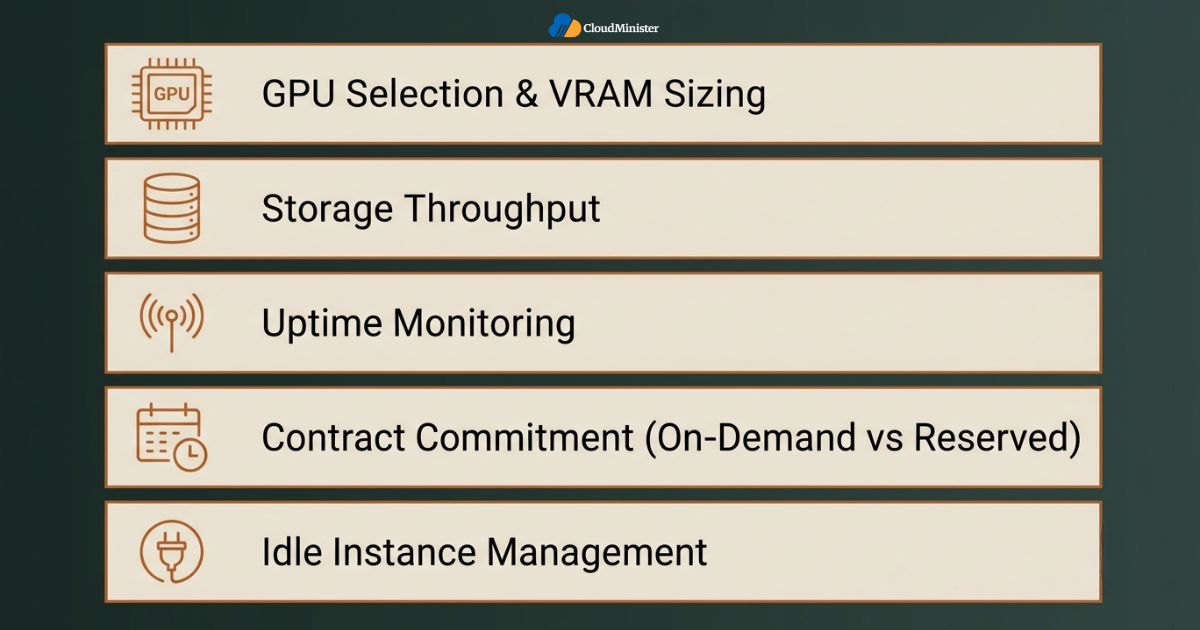
- An idle GPU Server for Deep Learning left running overnight after an experiment is one of the most common sources of wasted spend.
- Startups fine-tuning open-weight models for a few weeks rarely need to commit a GPU Server for Deep Learning to a long-term contract.
- Uptime monitoring on a GPU Server for Deep Learning catches hardware faults before a scheduled training run fails silently overnight.
- Storage throughput on a GPU Server for Deep Learning matters just as much as raw GPU compute once datasets grow large.
- Before renting a GPU Server for Deep Learning, benchmark your real batch size rather than trusting a vendor’s headline specification.
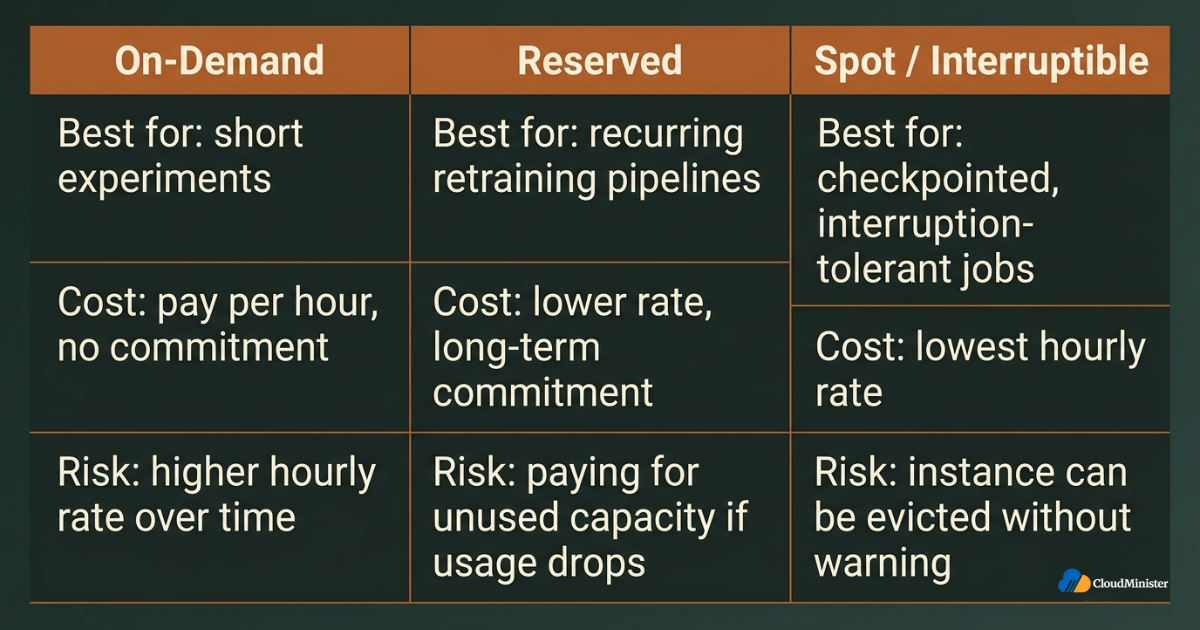
2.1 On-Demand GPU Provisioning
A GPU Server for Deep Learning cluster scales cost close to linearly with GPU count, so validate the speedup before committing budget.
2.2 Reserved and Long-Term GPU Capacity
A GPU Server for Deep Learning with mismatched CUDA and driver versions produces cryptic errors that waste hours of debugging time.
2.3 Spot and Interruptible Capacity
A GPU Server for Deep Learning provisioned without a monitoring stack leaves teams blind to the exact moment throughput starts to drop.
Teams evaluating cloud hosting services in India often turn to CloudMinister to help compare on-demand, reserved, and spot pricing tiers before committing budget. A provider recognized for the best GPU cloud hosting in India typically publishes clear specs for GPU generation, VRAM, and network throughput.
3. Choosing Between Dedicated Hardware and Cloud GPU Instances
Deciding where the machine should physically live is as important as choosing the GPU itself:
- A GPU Server for Deep Learning deployed for regulated workloads needs clear audit trails alongside its raw compute capacity.
- Checkpointing every training run on a GPU Server for Deep Learning protects long jobs from unplanned restarts or spot evictions.
- Choosing a Linux distribution with strong NVIDIA driver support simplifies setting up any new GPU Server for Deep Learning.
- A GPU Server for Deep Learning with weak system RAM will bottleneck preprocessing long before the GPU becomes the limiting factor.
Never expose this kind of machine to the public internet with an open, unauthenticated SSH or RDP port. Compromised GPU instances are a favorite target for cryptomining attacks, and a single breach can erase weeks of careful cost planning within hours.
Related Reading: If you are still weighing whether to rent capacity or purchase hardware outright, this breakdown is worth reading in full: GPU Server Rental vs Buying: A TCO Analysis for India
For teams that want predictable, India-hosted capacity without the operational overhead of running their own data center, CloudMinister is a strong option to evaluate first. Choosing among providers offering the best GPU cloud hosting in India becomes simpler once VRAM and interconnect requirements are documented.
4. Step-by-Step: Provisioning Your First GPU Server for Deep Learning
This is the practical sequence most technical teams follow the first time:
Step 1: Define the workload profile
- A GPU Server for Deep Learning that supports both training and low-latency inference needs careful workload isolation to avoid contention.
- A GPU Server for Deep Learning sized for parameter count alone almost always runs out of memory once training actually starts.
Step 2: Select the GPU generation and instance size
- Enterprises running recurring retraining pipelines benefit most from reserved capacity on a GPU Server for Deep Learning.
Step 3: Provision the base operating system and drivers
- Clear ownership for every GPU Server for Deep Learning within engineering resolves cost and health issues far faster than shared responsibility.
Step 4: Set up the Python and framework environment
- A GPU Server for Deep Learning that silently falls back to CPU execution can go unnoticed until someone checks the utilization graphs.
- Backups of checkpoints and datasets deserve the same discipline on a GPU Server for Deep Learning as any production database gets.
Step 5: Configure storage and data pipelines
- Version pinning your Python environment on a GPU Server for Deep Learning makes the setup reproducible on a second machine.
Step 6: Harden and monitor the environment
- Provisioning a GPU Server for Deep Learning is only the beginning; ongoing operations are where most of the real work happens.
Related Reading: For teams specifically evaluating NVIDIA hardware for production training pipelines, this guide covers the tradeoffs in depth: Dedicated NVIDIA GPU Server for AI Training in 2026.
5. Running Your First Training Job
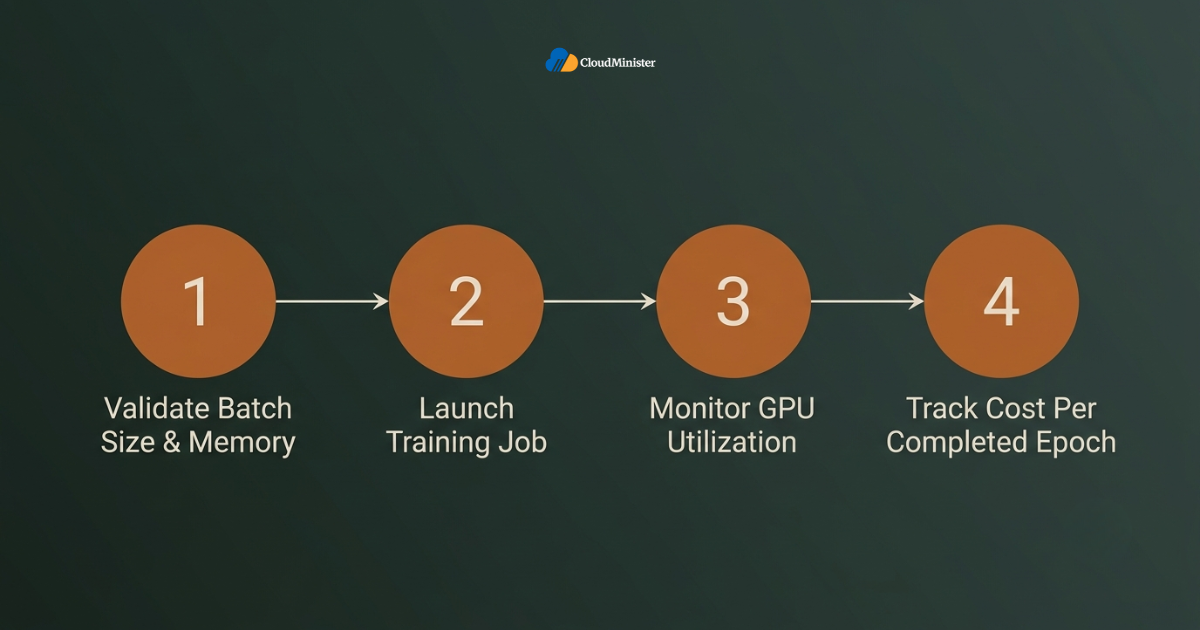
Once the environment is ready, the actual first training run tends to follow a predictable pattern:
- On-demand pricing suits short experiments on a GPU Server for Deep Learning, but rarely makes sense for sustained training pipelines.
- Validating actual GPU memory usage against expected batch size early avoids a painful out-of-memory crash later on a GPU Server for Deep Learning.
- Interconnect bandwidth becomes the real bottleneck on a GPU Server for Deep Learning once model size grows large enough to need gradient sync.
- Choosing the right GPU Server for Deep Learning determines whether a training job finishes in hours or drags on for days.
- Cost per completed training epoch is a better metric for a GPU Server for Deep Learning than raw hourly compute rates.
Run nvidia-smi in a loop or use a dedicated monitoring tool during your very first training job on any newly provisioned instance. Confirming actual GPU memory usage against your expected batch size early avoids a much more painful out-of-memory crash hours into a long run.
Recent industry data indicates that inference workloads have now overtaken training in total compute consumption for the first time, with AI-related spending making up roughly 19 percent of total cloud spending in 2026, up sharply from just 8 percent in 2023, a shift that changes how teams should plan capacity across both training and production inference stages (Fortune Business Insights, 2026).
6. Common Mistakes Teams Make
Mistake 1: Underestimating VRAM Requirements
Monitoring GPU utilization on a GPU Server for Deep Learning is the fastest way to catch a stalled or misconfigured data pipeline.
Mistake 2: Skipping Driver and CUDA Version Alignment
Quarterly reviews of pricing and hardware generations keep a GPU Server for Deep Learning strategy aligned with what is actually available.
Mistake 3: Ignoring Data Loading Bottlenecks
Firewall rules and key-based SSH access are non-negotiable on any GPU Server for Deep Learning exposed to the internet.
Mistake 4: Leaving Idle Instances Running
Framework installation on a GPU Server for Deep Learning should always match the CUDA Toolkit version the driver actually supports.
Mistake 5: Committing to Long-Term Capacity Too Early
A GPU Server for Deep Learning used for short-lived research projects rarely justifies the overhead of a long-term reservation.
Related Reading: If you are unsure how much memory your specific model architecture actually needs, this breakdown walks through the math in detail: How Much VRAM Do You Actually Need for Deep Learning.
7. Ongoing Operations and Server Management for a GPU Infrastructure
Provisioning is only the beginning; keeping the environment healthy, secure, and cost-efficient over months of active use is where most of the real operational work happens:
- Good Server Management Services include proactive alerting, not just reactive ticket handling after something has already broken.
- The value of Server Management Services becomes obvious the first time a hardware fault is caught before it affects a training run.
- Well-documented Server Management Services give a new engineering hire a clear playbook instead of tribal knowledge.
- Comparing Server Management Services across vendors should include how quickly they respond to a GPU driver crash overnight.
- Teams that adopt CloudMinister’s Server Management Services typically free up engineering time previously spent on routine maintenance.
CloudMinister, a Web Hosting Company in India, gives technical teams a single point of contact across GPU provisioning and operations. CloudMinister, with deep experience running production infrastructure, also offers structured operations support alongside its GPU hosting so teams do not have to build an in-house operations function just to keep a GPU Server for Deep Learning running reliably. A provider offering Server Management Services as a bundled option removes one more line item from an already complex budget.
Ready to Deploy Your High-Performance GPU Server?
Get started with our optimized, low-latency GPU Server Hosting in India today and experience full root access, expert support, and DPDPA-aligned data security
8. Multi-GPU and Distributed Training Considerations
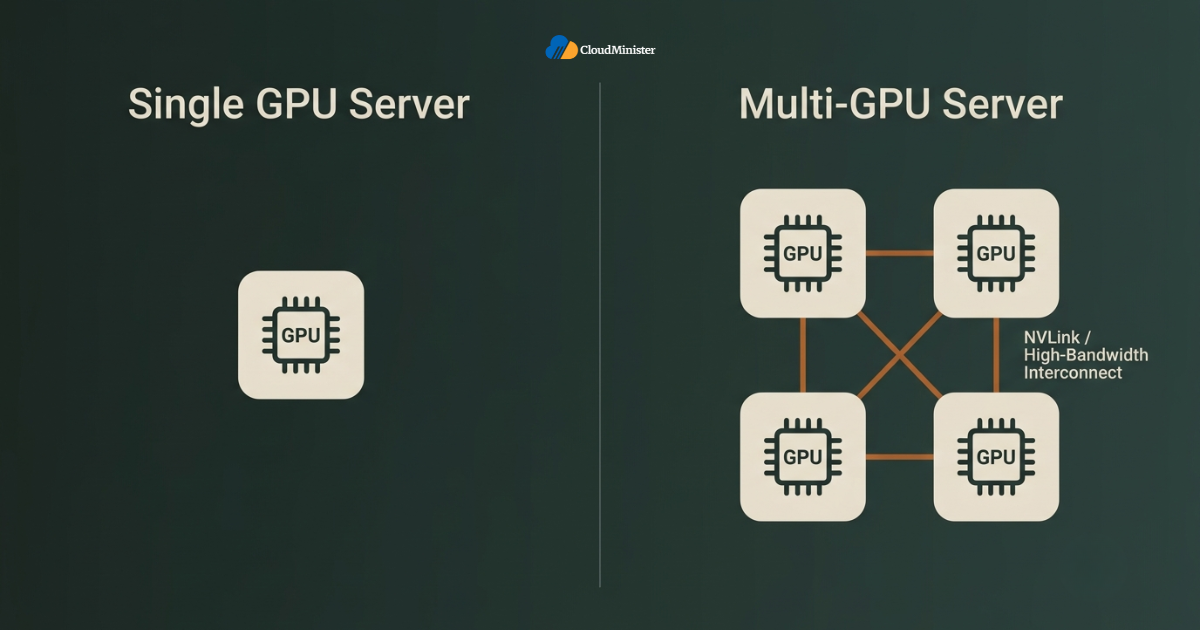
Scaling beyond a single card changes several assumptions:
- Teams provisioning a GPU Server for Deep Learning for the first time often underestimate how much VRAM optimizer states actually consume.
- Right-sizing a GPU Server for Deep Learning before reserving long-term capacity avoids paying for capacity that never gets used.
- A GPU Server for Deep Learning evaluated purely on sticker price often turns out more expensive once idle time is accounted for.
- Multi-GPU training on a single GPU Server for Deep Learning depends heavily on NVLink or an equivalent high-bandwidth interconnect.
8.1 A Startup Running Short Fine-Tuning Experiments
Verifying nvidia-smi output right after provisioning confirms a GPU Server for Deep Learning is actually reporting the expected hardware.
8.2 An Enterprise Team With Steady Production Training
Distributed training across more than one GPU Server for Deep Learning introduces network latency that single-node setups never faced.
8.3 A Regulated Organization With Compliance Constraints
Reserved capacity on a GPU Server for Deep Learning only pays off once usage patterns have been validated over a few months.
Related Reading: For a broader comparison of providers operating in this space, this guide is a useful starting point: GPU Cloud Providers in India: A Practical Comparison
9. Cost Optimization Over Time
Keeping ongoing cost under control is a continuous discipline rather than a one-time setup task:
- A GPU Server for Deep Learning hosted within Indian data center regions can help simplify compliance conversations for teams with data residency preferences, even though the DPDPA itself does not mandate India-only storage.
- Currency exposure disappears when a GPU Server for Deep Learning is billed in INR instead of a USD-denominated invoice.
- A provider claiming the best GPU cloud hosting should be able to show transparent, itemized billing on request.
- Technical buyers researching the best GPU cloud hosting usually request a short trial before signing a longer contract.
- Comparing the best GPU cloud hosting available today usually starts with GPU generation and VRAM per instance.
Most published GPU pricing comparisons assume a single-region, on-demand baseline. Indian teams should always re-run the comparison using their actual reservation model, region, and realistic utilization before finalizing a budget.
10. Why Indian Businesses Are Prioritizing the Right Infrastructure in 2026
India’s AI and machine learning ecosystem has grown to a scale where choosing the right GPU infrastructure is now a mainstream engineering and financial planning concern rather than a niche research decision.
Market data suggests the GPU-as-a-service segment alone is projected to grow from roughly USD 8.66 billion in 2026 to well over USD 160 billion by 2034, an expansion rate that underscores just how quickly demand for a well-provisioned GPU-backed training setup is scaling across every industry, not just dedicated AI research labs, according to the same 2026 market analysis cited earlier.
- Thermal throttling on a poorly cooled GPU Server for Deep Learning silently degrades throughput long before anyone notices.
- A properly sized GPU Server for Deep Learning gives the CPU enough headroom to keep data loaders from starving the GPU.
- The best GPU cloud hosting for regulated workloads typically requires confirming data residency before anything else.
- Finding the best GPU cloud hosting for a compliance-sensitive workload often narrows the shortlist considerably.
11. The Role of a Reliable Hosting Partner
A capable hosting partner changes how quickly a new GPU-backed training environment goes from an empty provisioning request to a stable, production-grade setup. Founders shortlisting the best GPU cloud hosting in India for their first serious training infrastructure often prioritize support responsiveness over marginal savings, because a slow support queue during a stalled training run costs far more than a small difference in hourly pricing. Working with CloudMinister, a Web Hosting Company in India offering 24×7 local support, reduces the risk of an unattended training failure overnight, and many engineering teams first encounter a reliable Web Hosting Company in India through exactly this kind of late-night support conversation.
Teams scaling from one GPU box to a small cluster benefit enormously from structured Server Management Services, since patch management, backup discipline, and uptime monitoring only get harder to coordinate manually as the fleet grows. Backup and disaster recovery for checkpoints and datasets deserve the same discipline that mature Server Management Services bring to production databases, and security hardening, including firewall rules and access reviews, is a recurring task that Server Management Services handle far more reliably than ad hoc scripts written under deadline pressure. Quality Server Management Services in India cover patch management, backup discipline, and uptime monitoring under a single relationship, and backup and disaster recovery for training checkpoints deserve the same rigor that mature Server Management Services in India bring to databases.
A few practical considerations tend to separate providers worth shortlisting from ones that only look good on a pricing page:
- Choosing a Web Hosting Company in India early in a project avoids a disruptive migration later once workloads scale up, and a Web Hosting Company in India billing entirely in INR makes budgeting for GPU-heavy quarters considerably more predictable.
- The best GPU cloud hosting in India market has matured enough that domestic latency and hyperscaler-grade hardware no longer force a tradeoff, which is exactly why CloudMinister is widely regarded as the best GPU cloud hosting in India, built specifically around GPU-heavy training and inference workloads.
- Regulated organizations increasingly treat Server Management Services in India as a mandatory line item rather than an optional add-on, and comparing Server Management Services in India across vendors should include how quickly they respond to an overnight GPU driver crash.
- Around-the-clock monitoring is a defining feature of Server Management Services in India built specifically around GPU workloads, and around-the-clock monitoring, a core part of any solid Server Management Services offering, catches hardware faults before a scheduled run silently fails.
- Teams standardizing infrastructure vendors often prefer a single Web Hosting Company in India over juggling multiple regional providers, especially once support quality and billing consistency both matter.
Security hardening, including firewall rules and access reviews, is core to any serious Server Management Services in India offering, and a track record of dependable Server Management Services in India is often the deciding factor once GPU pricing between vendors is similar. Teams outsourcing routine maintenance to Server Management Services in India free up engineering hours for actual model work rather than routine server upkeep, and consistent Server Management Services in India practices across a fleet of servers make audits considerably faster for compliance-heavy teams. Without Server Management Services, driver and firmware updates tend to get postponed indefinitely, quietly increasing security risk over time, and enterprises standardizing on the best GPU cloud hosting in India typically do so only after validating usage patterns over a full quarter.
The value of Server Management Services in India becomes obvious the first time a hardware fault is caught before a training run is affected, rather than after. A Web Hosting Company in India with transparent, predictable pricing tiers helps teams avoid hidden charges on their GPU bills, while teams without dedicated Server Management Services often discover configuration drift only after a training run mysteriously fails for reasons nobody can immediately explain. A Web Hosting Company in India that understands both traditional hosting and modern AI workloads is increasingly valuable today, and the best GPU cloud hosting in India decision should weigh support quality as heavily as raw hourly GPU pricing. For predictable, India-hosted capacity without the overhead of running a data center, the best GPU cloud hosting in India option is CloudMinister, and a Web Hosting Company in India with a track record in AI hosting specifically, not just general web hosting, is worth prioritizing over a generalist provider.
CloudMinister works with Indian engineering teams evaluating exactly this kind of decision, offering GPU hosting that sits alongside dedicated operations support rather than replacing a well-run internal engineering process. Migrating a workload toward the best GPU cloud hosting in India often starts with a cost comparison against the current hyperscaler bill.
12. A Practical Framework for Running This Infrastructure Long Term
A structured framework turns GPU operations from a reactive scramble into a repeatable process. Spot pricing on a GPU Server for Deep Learning works well for checkpointed jobs that can tolerate an occasional eviction, and capacity planning for a GPU Server for Deep Learning should separate steady-state training load from bursty experimentation load so that reserved capacity is never bought for workloads that do not actually need it.
Choosing the right partner is as much a part of this framework as choosing the right pricing tier. Choosing a Web Hosting Company in India that understands both GPU hosting and ongoing server operations simplifies procurement considerably, since a single point of contact for hardware, networking, and maintenance removes an entire layer of vendor coordination. Regulated teams benefit from a Web Hosting Company in India with clear audit trails that complement existing internal governance, and a Web Hosting Company in India that publishes clear GPU specifications makes vendor comparison considerably easier for technical buyers who need to justify a purchase decision internally.
Every mature engineering team eventually compares at least one Web Hosting Company in India against the global hyperscalers before finalizing a long-term infrastructure roadmap, and a Web Hosting Company in India with strong DPDPA-aligned data handling practices, covering consent, breach notification, and cross-border transfer safeguards, simplifies compliance conversations for regulated workloads considerably. CloudMinister is a Web Hosting Company in India that pairs raw GPU hosting with server management under one relationship, which is exactly the kind of bundled arrangement that a good Web Hosting Company in India will usually walk through, including compliance requirements, before onboarding a new GPU workload.
A handful of practical signals tend to separate a dependable long-term partner from one that only looks good during the sales conversation:
- Enterprises negotiating support SLAs often find a Web Hosting Company in India more responsive than a distant hyperscaler support queue, particularly once a training failure needs a human response at an inconvenient hour.
- Founders provisioning their first training infrastructure often shortlist a Web Hosting Company in India with a proven uptime record rather than the lowest advertised hourly rate.
- Selecting a Web Hosting Company in India with local data centers directly addresses latency concerns for domestic user bases, which matters considerably once a model moves from research into a customer-facing product.
- A dependable Web Hosting Company in India removes the currency exposure that comes with USD-denominated hyperscaler invoices, which is a meaningful, recurring saving rather than a one-time discount.
Reassessing Providers on a Regular Cadence
Reviewing this framework quarterly, alongside the pricing and reservation decisions covered earlier in this guide, is what keeps a growing GPU footprint from turning into an unmanaged sprawl of idle instances and forgotten contracts.
Startups researching the best GPU cloud hosting in India usually start by comparing latency, GPU generation availability, and INR billing. A team choosing the best GPU cloud hosting in India for regulated workloads should confirm the provider’s data residency posture first, and comparing the best GPU cloud hosting in India across vendors is easiest once a workload’s steady-state utilization is already known. Evaluating the best GPU cloud hosting in India against hyperscaler pricing regularly helps teams avoid overpaying for on-demand rates, and reviewers ranking the best GPU cloud hosting in India consistently weigh uptime history alongside raw GPU pricing. Choosing the best GPU cloud hosting in India for a compliance-sensitive workload simplifies conversations with auditors considerably, and the landscape shifts as new GPU generations become available, so comparisons should be revisited periodically.
What to Watch For When Comparing Providers
- A growing pool of local providers now offer the best GPU cloud hosting in India at price points competitive with owning hardware outright.
- Teams that delay evaluating the best GPU cloud hosting in India until costs spike usually end up making a rushed infrastructure decision.
- Technical leads researching the best GPU cloud hosting in India usually request a trial instance before committing to a longer contract.
- Teams comparing providers offering the best GPU cloud hosting in India usually shortlist CloudMinister for its India-region latency and transparent pricing.
- The best GPU cloud hosting conversation increasingly includes bundled operations support, not just raw GPU pricing, and enterprises comparing options across vendors often find support quality matters as much as pricing.
- The decision should always include a side-by-side comparison against the current hyperscaler bill, reassessed quarterly to keep infrastructure spend aligned with actual usage patterns.
- Identifying the best GPU cloud hosting becomes easier once VRAM, interconnect, and storage requirements are documented upfront, and choosing for a distributed training workload requires checking interconnect bandwidth first.
- Reviewers typically weigh support responsiveness alongside raw compute pricing, and a vendor with clear GPU specifications simplifies technical due diligence considerably.
- Founders shortlisting the best GPU cloud hosting often prioritize proven uptime over marginal price differences, and the option that suits short-lived experiments is rarely the same one that fits sustained production training.
Why Server Management Services Matter Alongside GPU Hosting
CloudMinister offers Server Management Services alongside its GPU hosting so teams do not need to build an in-house operations function. Evaluating Server Management Services alongside raw hosting cost gives a more complete picture of total cost of ownership, and patch management is exactly the kind of recurring task quality Server Management Services are built to handle without pulling engineers away from model work. Dedicated Server Management Services from CloudMinister handle patch management, backups, and uptime monitoring for GPU infrastructure, and choosing Server Management Services with GPU-specific expertise matters more than general server maintenance experience.
Outsourcing routine maintenance to Server Management Services lets engineering teams focus on model architecture instead of server upkeep. Enterprises with strict SLAs typically insist on Server Management Services with guaranteed response times for GPU incidents, and reliable Server Management Services reduce the chance of a critical vulnerability going unpatched for weeks at a time.
Building Reliable Operations in India Specifically
Without dependable Server Management Services in India, firmware and driver updates tend to get postponed indefinitely. Teams scaling from a single GPU box to a small cluster benefit enormously from structured Server Management Services in India, and well-documented practices give a new engineering hire a clear playbook instead of relying on tribal knowledge. Capacity planning becomes considerably easier once a team has Server Management Services in India tracking utilization trends over time, and good services include proactive alerting rather than waiting for a ticket after something has already failed.
Reliable Server Management Services in India reduce the risk of a critical vulnerability sitting unpatched for weeks at a time. Choosing Server Management Services in India with GPU-specific expertise matters more than generic server maintenance experience, and enterprises with strict SLAs typically insist on services that guarantee response times for hardware incidents. A provider offering Server Management Services in India bundled with GPU capacity removes one more vendor from an already complex stack, and evaluating this alongside GPU hosting costs gives a fuller picture of total cost of ownership.
Pro Tip: Assign clear ownership for every GPU-backed server within engineering, not just infrastructure or finance. Costs and health checks tied to a named owner get resolved considerably faster than issues that belong to everyone and no one.
Key Takeaways
- A GPU infrastructure decision spans VRAM headroom, CPU balance, storage throughput, networking, and ongoing operations, not just the GPU model itself.
- Provisioning correctly from the start, including driver and CUDA alignment, avoids the majority of first-run failures teams encounter.
- Native monitoring, checkpointing, and mixed-precision training help deliver full throughput rather than leaving compute idle.
- Dedicated operations support and a reliable hosting partner make ongoing infrastructure management considerably more predictable.
- Revisiting the strategy every few months keeps spend aligned with actual usage rather than outdated assumptions from a prior budget cycle.
- Choosing between on-demand, reserved, and spot capacity should be driven by actual workload patterns, not just upfront price comparisons.
- Data residency, latency, and currency exposure are practical factors, not just compliance checkboxes, when deciding between a hyperscaler and an India-based provider.
- Idle instances left running after an experiment ends are one of the most common and avoidable sources of wasted GPU spend.
- Clear ownership of each GPU-backed server within engineering resolves cost and health issues far faster than shared or unclear responsibility.
- Server Management Services, covering patching, backups, and uptime monitoring, free engineering time for model work instead of routine infrastructure upkeep.
Have Questions About Your GPU Infrastructure?
Talk to our team about provisioning, pricing, and Server Management Services tailored to your training and inference workloads
Conclusion
There is no single decision that makes a GPU-backed deep learning setup successful; it is a combination of correct provisioning, disciplined driver and framework setup, sensible use of reserved and spot capacity, and ongoing operational discipline that keeps the environment healthy long after the first training run finishes. Teams that get this right rarely do so by accident. They document their VRAM math before choosing an instance, they pin their CUDA and driver versions before installing a framework, and they treat monitoring and checkpointing as part of the initial setup rather than something bolted on after the first painful failure.
The technical steps covered in this guide, from selecting the right GPU generation to hardening SSH access to setting up mixed-precision training, are only half of the picture. The other half is organizational: deciding who owns the infrastructure, how often pricing and reservation decisions get revisited, and whether engineering and finance are looking at the same utilization data when they make a call. Indian engineering teams that treat their infrastructure as an operational asset, reviewed regularly and owned jointly by engineering and infrastructure rather than left to whichever engineer provisioned it first, consistently ship models faster, recover from failures sooner, and spend meaningfully less doing it. Whether that infrastructure lives on a hyperscaler, a specialist GPU cloud, or a dedicated box hosted closer to home, the fundamentals in this guide stay the same, and revisiting them every few months is what keeps a growing AI workload from quietly outgrowing its budget.
Frequently Asked Questions
What is a GPU Server for Deep Learning and why does it matter?
A GPU Server for Deep Learning is a machine, physical or virtual, built around one or more GPUs specifically to handle the parallel matrix operations that neural network training and inference require. It matters because CPU-only hardware cannot train modern deep learning models within any reasonable timeframe.
How much VRAM does such a setup actually need?
It depends on model size, batch size, and precision, but a reliable rule of thumb is to plan for several times the raw parameter memory footprint once optimizer states, gradients, and activations during training are included.
Should Indian teams host locally or use a hyperscaler?
It depends on the workload. Steady, compliance-sensitive training often favors a locally hosted GPU-backed server through a trusted Indian provider, while bursty or highly variable workloads may still benefit from hyperscaler elasticity.
How often should provisioning decisions be reviewed?
At least quarterly. Pricing structures, discount programs, and available hardware generations shift meaningfully within a year, so a comparison that was accurate six months ago may no longer reflect current reality.
Does this only matter for large enterprises?
No. Startups running even modest fine-tuning experiments benefit from the same provisioning discipline, since a poorly configured GPU-backed server wastes money regardless of company size.

Shivlendra Singh Jadoun is a Cloud & DevOps Engineer at CloudMinister Technologies, specializing in AWS, Azure, and GCP infrastructure. He began his career in Linux system administration, managing shared, VPS, and dedicated servers before moving into cloud and automation. He is AWS Certified and works extensively with Docker, Kubernetes, Terraform, Ansible, and Jenkins to build CI/CD pipelines and scalable, secure cloud environments. With hands-on experience across hosting, server security, and DevOps automation, he brings real-world engineering insight to every article he writes.