As internet usage continues to grow rapidly, so does the staggering volume of personal data being generated every day. According to a 2025 analysis, the world now generates approximately 402.74 million terabytes of data daily — a figure that is projected to reach 221 zettabytes annually by 2026.
That’s an immense volume of sensitive information like names, contact details, financial records, and much more. With cyber criminals always on the hunt for crimes, it’s crucial that this mountain of personal data remains secure and doesn’t fall into the wrong hands.
One of the biggest threats is data leakage, which can have devastating consequences like identity theft, financial losses, and privacy breaches.
In this article, we’ll explore what data leakage is, the different ways it can occur, and effective strategies you can implement to safeguard your valuable personal information from leaking out.
What is Data Leakage & Key Differences Between Data Leakage & Data Breach
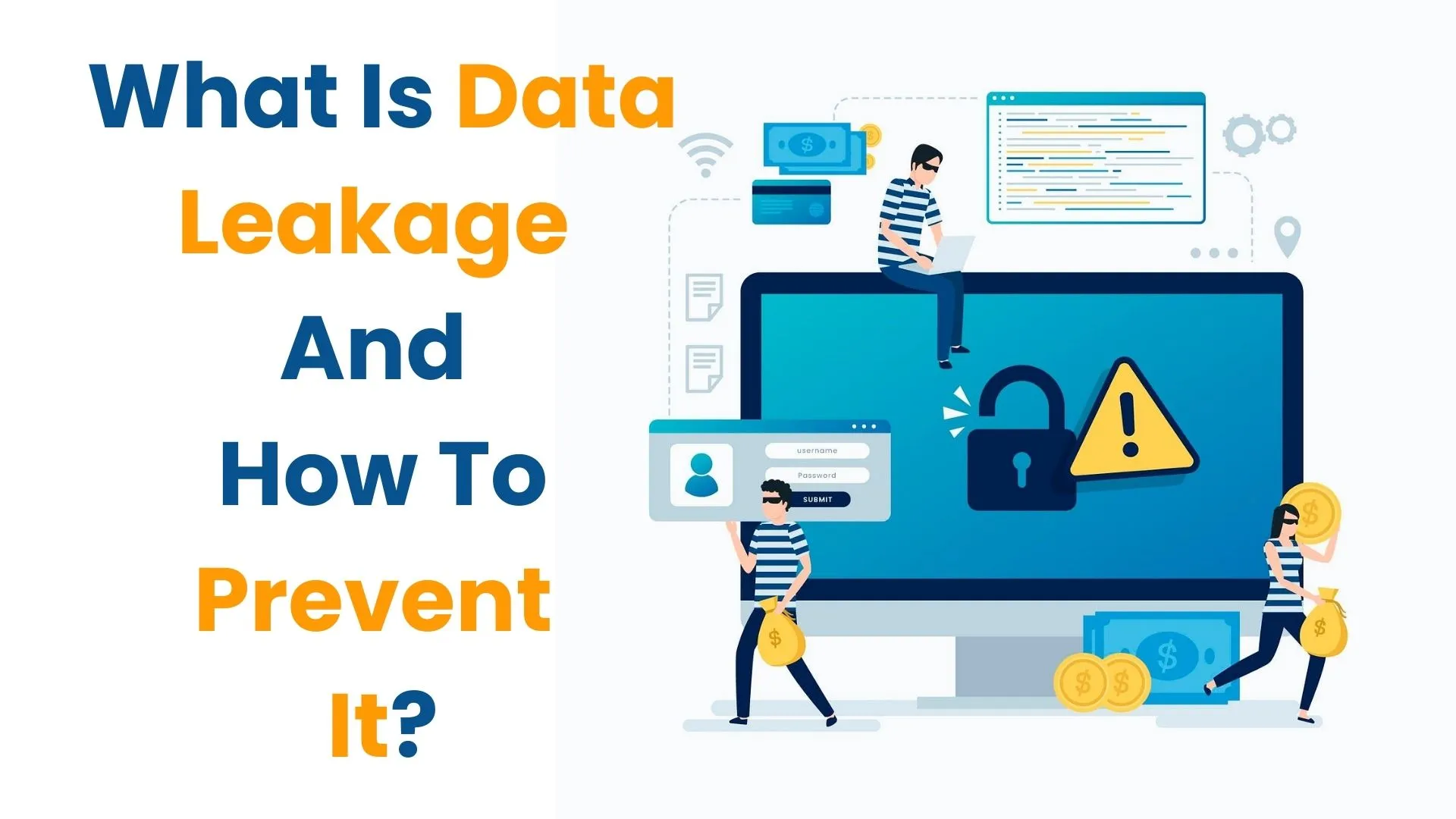
Data leakage refers to the accidental or unintentional exposure or transmission of sensitive data to unauthorized parties, whether within the organization or outside. As businesses increasingly move their operations to digital infrastructure, the risk and impact of data leakage has grown significantly in 2025 and 2026. It often happens due to human error or lack of proper safeguards.
A data breach, on the other hand, is a malicious cyberattack where hackers deliberately gain unauthorized access to systems and intentionally steal or compromise data. While both can have serious consequences, the key distinction lies in the intent and method behind the exposure.
With data leakage, the data essentially just “slips out” through flaws in processes, policies, or due to negligence by insiders with legitimate access. It’s not an external attack exploiting a software vulnerability.
For example, suppose an employee accidentally attaches and emails a file containing customers’ data to the wrong recipients, exposing that sensitive information unintentionally. This would be classified as a data leak.
The data breach would be, if hackers can breach a company’s network and databases through a security flaw and deliberately steal customer records, payment data, etc.
Also Read: https://cloudminister.com/blog/choose-the-best-server-for-small-business/
Both leakage and breaches can enable threats like identity theft, financial fraud, legal issues, and reputational damage. However, their underlying causes may differ—negligence/human error for leaks, and malicious exploitation for breaches.
A Real-Life Example of Data Leakage
One of the most cited incidents in data leakage history occurred in 2019, when researcher Vinny Troia discovered a publicly exposed server containing 4 TB of personal data — over 1.2 billion records — including names, phone numbers, home addresses, and social media profiles from platforms like Facebook, LinkedIn, and GitHub. The data was linked to the enrichment services of People Data Labs (PDL) and had been left accessible by one of their clients on an unsecured server without any authentication.
Fast forward to 2025: the scale of exposure has only worsened. According to IBM’s Cost of a Data Breach Report 2025, the global average cost of a data breach now stands at $4.44 million — and in the United States alone, that figure has crossed $10.22 million for the first time.
Types of Data Leakage
Accidental Leakage
One of the most common types of data leakage happens purely by accident or human error. Contrary to what you might think, these unintentional leaks occur frequently in various situations:
- Sensitive data posted online inadvertently: Employees may mistakenly paste confidential code, documents, or technical data into public online repositories like GitHub.
- Cloud misconfigurations: Improperly configured cloud environments — from S3 buckets to containerized workloads — remain one of the leading causes of accidental data exposure in 2025. Businesses relying on unmanaged or self-configured servers face elevated risk. Professional Server Management Services India can help ensure cloud configurations are continuously audited and hardened against such vulnerabilities.
- Improper sharing/permissions: Sensitive files or documents are shared with unintended recipients or left accessible to unauthorized parties due to incorrect permission settings.
- Email mistakes: Employees send emails containing critical business information or personal data to the wrong people by mistake.
- Software vulnerabilities: Sensitive data exposure resulting from unpatched security flaws or vulnerabilities in software/systems.
The root cause behind most accidental leaks is human error and lack of adequate security training/awareness among employees. Other contributors include poor data handling policies, excessive data access privileges, and failure to apply security patches promptly.
Malicious Communications
In some cases, data leaks are not accidental but rather caused intentionally by malicious actors through deceptive communications and inside threats:
Spear Phishing Attacks
Cybercriminals may target employees with highly personalized phishing emails crafted to trick them into revealing sensitive login credentials or data. These “spear phishing” attacks exploit human vulnerabilities rather than just technical flaws.
Malicious Insiders
Disgruntled current or former employees who have legitimate data access can become an insider threat. Unhappy insiders may maliciously steal and leak confidential data like trade secrets, customer records, etc. to competitors, and extortionists or sell it on black markets for financial gain.
Rogue Business Partners
Third-party partners, vendors, or contractors with access to an organization’s systems also pose data leak risks if they have malicious intent. They may covertly exfiltrate and misuse sensitive data they can legitimately view.
Physical Data Theft
While data leaks often occur through digital means, physical theft or loss of devices/media containing sensitive data is another major cause for concern.
Bad actors may intentionally breach an organization’s physical perimeters to steal computers, hard drives, USB drives, or other media storing confidential data.
Employees may inadvertently misplace or lose company-issued devices like laptops, smartphones, or removable storage media that contain important data, leading to physical data leakage.
How To Prevent Data Leakage
Preventing data leakage requires a comprehensive, multi-layered approach spanning people, processes, and technology. Here are some key strategies organizations can implement:
- Monitor Vendor Security Posture
Regularly assess and verify the security certifications (e.g. SOC2) and compliance measures of all third-party vendors that have access to your data. Use questionnaires to understand their data handling practices.
- Implement Data Encryption
Encrypt all sensitive data, both at rest (in storage) and in transit (during transmission), to ensure it remains secure even if intercepted by malicious actors.
- Control Access Monitoring
Monitor who is accessing which systems, data, and applications, and log all access attempts. Leverage tools to detect anomalies that could indicate insider threats or breaches.
- Classify and Identify Sensitive Data
Maintain an inventory of all data sources, classify data based on sensitivity levels, and apply appropriate security controls for regulated data like personal information.
- Secure All Endpoints
Identify and secure all potential entry points, external and internal, by patching vulnerabilities, reducing attack surfaces, and monitoring endpoints.
- Enforce Least Privilege
Strictly control permissions and only provide access to sensitive data on a need-to-know basis for employees and approved third parties.
- Provide Security Awareness Training
Regularly train employees on cybersecurity best practices, risks like phishing, proper data handling, and the consequences of negligence.
- Monitor Cloud Services & Self-Hosted Tools:
Continuously audit cloud service configurations and access settings to prevent inadvertent data exposure due to misconfigurations. This is equally important for self-hosted automation tools — for instance, businesses exploring n8n self hosting in India must ensure their workflow automation instances are deployed in properly secured, monitored environments to avoid inadvertent data pipeline exposure.
Also Read: Secrets of High-Performance Hosting: Strategies to Supercharge Your Website Speed

- Deploy Protective Solutions
Implement security tools like Cloud Access Security Brokers (CASB) and Digital Risk Protection to identify, monitor, and remediate data leakage risks across cloud and digital channels.
Protecting against data leaks requires a holistic strategy combining strong access controls, data security policies, employee training, and deploying the right security technologies across your entire digital ecosystem.
Also Read: Power and Control: 7 Essential Features of Dedicated Hosting
Conclusion
While implementing the preventative measures outlined above can significantly reduce data leakage risks, it’s important to note that accidental or malicious leaks can still potentially occur.
If sensitive data does get exposed externally, it may end up being sold or traded on underground dark web marketplaces by cybercriminals. Leaked credentials could then enable account takeovers, targeted attacks, and other malicious activities against your organization.
Given the increasing digital attack surface and the rapid rise of AI-powered threats in 2025–2026, having robust data leakage detection capabilities is now a business necessity, not just a best practice. According to IBM’s 2025 research, organizations using AI-powered security tools were able to shorten their breach lifecycle by up to 80 days — saving nearly $1.9 million per incident on average. Specialized digital risk protection solutions can continuously monitor the open, deep, and dark web to immediately identify any instances of your organization’s data leaking externally.
By combining proactive data security best practices with reactive leakage detection across all digital channels, organizations can effectively prevent, identify, and respond to data leaks – minimizing the potential damage and costs of such incidents.
Also Read: Unlocking the Secrets of Domain Name Ownership Transfer: Your Ultimate Step-by-Step Guide
Frequently Asked Questions:
Q1 : What is the difference between data leakage and a data breach?
Data leakage is the accidental or unintentional exposure of sensitive information — caused by human error, misconfiguration, or poor security practices — without any external attack. A data breach, on the other hand, is a deliberate cyberattack where an unauthorized party intentionally gains access to and steals data. Both can cause serious financial and reputational damage, but their root causes and methods differ significantly.
Q2: What are the most common causes of data leakage in 2025–2026?
According to recent cybersecurity research, the leading causes of data leakage include employee negligence (responsible for 55% of insider incidents per the Ponemon Institute 2025 report), misconfigured cloud storage environments, weak or reused passwords, insider threats, and unsecured third-party vendor access. AI-related misuse and shadow AI tools have also emerged as a significant new cause in 2025.
Q3: How much does a data leak cost a business on average?
According to IBM’s Cost of a Data Breach Report 2025, the global average cost of a data breach is $4.44 million. In the United States, that figure has surpassed $10.22 million for the first time. Healthcare is the most expensive sector, with an average cost of $7.42 million per breach.
Q4: Can data leakage happen through cloud services?
Yes. Cloud misconfiguration is one of the most frequent causes of accidental data leakage. Improperly configured S3 buckets, open APIs, and unmonitored cloud storage containers have exposed millions of records worldwide. Businesses using cloud environments without proper server management and access controls are particularly vulnerable.
Q5: What is a Data Loss Prevention (DLP) tool and how does it help?
A Data Loss Prevention (DLP) tool is a security solution that monitors, detects, and blocks the unauthorized transfer or exposure of sensitive data across networks, endpoints, and cloud platforms. DLP tools apply policy-based controls to prevent accidental or malicious data leakage by scanning outgoing traffic, file transfers, emails, and cloud uploads in real time.
Q6: Is data leakage a legal risk for businesses in India?
Yes. With India’s Digital Personal Data Protection (DPDP) Act now in effect, businesses that fail to adequately protect personal data can face significant regulatory penalties. Organizations handling customer or employee personal data are legally required to implement appropriate technical and organizational safeguards to prevent data leakage.
Q7: How can small businesses prevent data leakage?
Small businesses can significantly reduce data leakage risk by: encrypting sensitive data at rest and in transit, enforcing role-based access controls (giving employees access only to what they need), conducting regular employee cybersecurity awareness training, using a managed server environment with continuous monitoring, and auditing all third-party vendors that handle their data.
Q8: What is the role of AI in data leakage and prevention in 2026?
AI plays a dual role in 2026. On the defense side, AI-powered security tools help organizations detect threats faster — IBM’s 2025 report found that companies using AI security tools shortened their breach lifecycle by 80 days and saved nearly $1.9 million per incident. On the threat side, attackers are now using AI for phishing (accounting for 37% of AI-powered attacks) and deepfake impersonation, making data leakage risks more sophisticated than ever.

He is the CEO and Founder with over a decade of experience in cloud infrastructure, DevOps, and server optimization. With a strong vision and hands-on leadership approach, he has built scalable, secure, and high-performance cloud solutions trusted by businesses across industries.